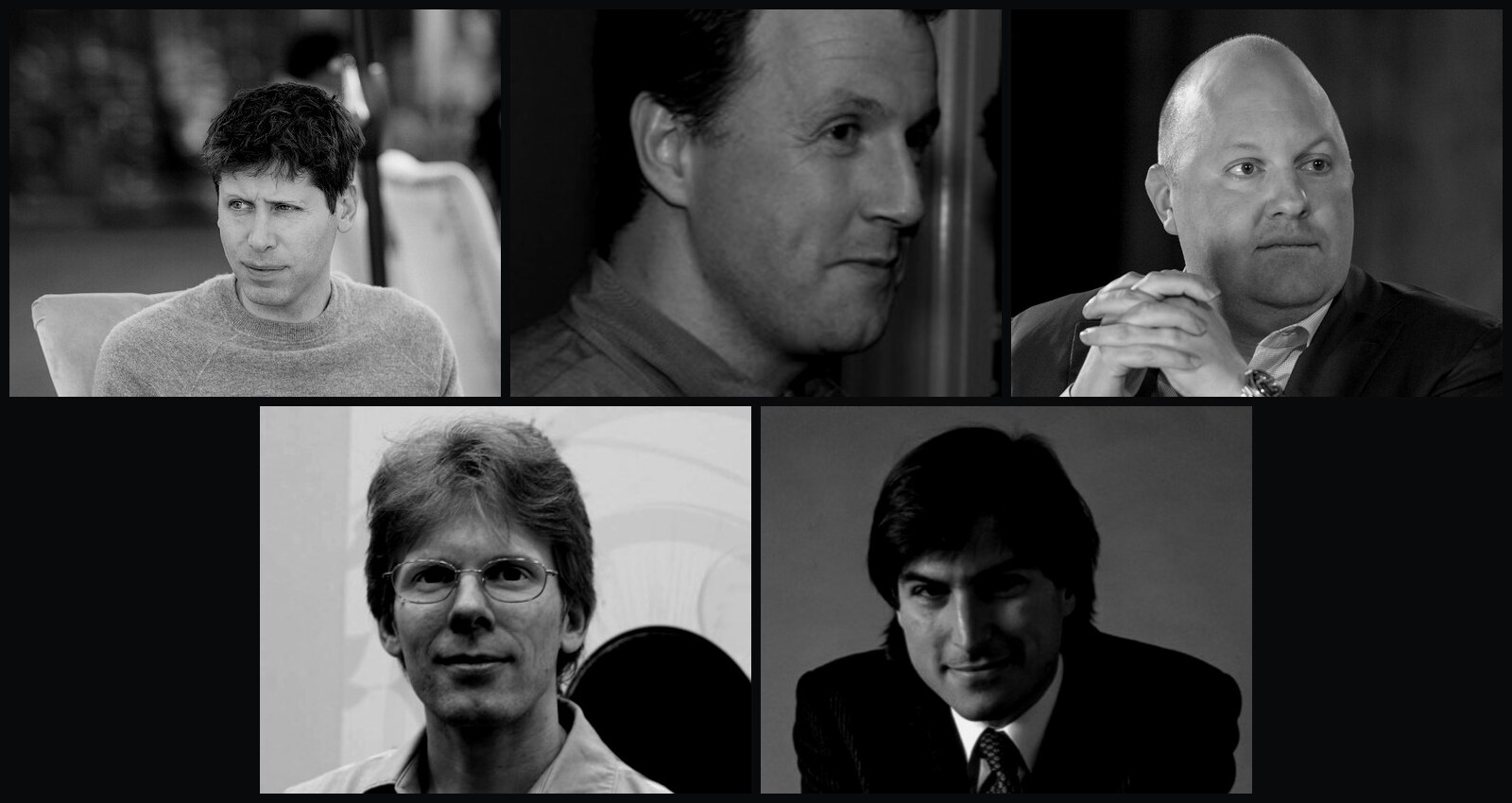
To do your life’s work, you need extreme focus. Yes, you should be materially unbalanced. No, you should not neglect your health, and it’s actually counterproductive. Top performers focus on what they can control, and your mind and body are the definitional examples.
Here are 17 proven tips from folks like Sam Altman and PG to improve your health and productivity and achieve elite performance.
Master your physical baseline
- Prioritize sleep. This is the highest ROI item and mentioned by every founder you can imagine, including Paul Graham, Sam Altman, Jeff Bezos, Mark Zuckerberg, Brian Chesky, and more.
Make your bedroom a cave: dark, cool, quiet 1. Common tactics include blackout curtains, a window AC or mattress pad, a white noise machine or earplugs. I like this eyemask and custom fitted earplugs (Kaiser hearing in SF).
Clear your mind. Stop screen time before bed. Read a book, even just for a few minutes. If your brain can’t stop churning, try this: visualize your mind as a cluttered desk, sweep all the items into drawers, and lock them.
Maintain strict sleep/wake timing. Regularity trains your body. - Move as much as you can. Preferably outside on your two feet.
This is incredibly common across history’s greatest thinkers. It should come as no surprise since we’re bipedal. PG and Jack Dorsey walked to work. Alex Karp and James Dyson are elite endurance athletes.
Kill two birds with one stone.
- Walk in the morning to get sunlight, kickstart alertness, and set up your body for sleep.
- Walk after meals to reduce postprandial crashes and stabilize your blood sugar; also great to do with your cofounder/partner.
- Walk during meetings or when you’re feeling stuck/tired/need to brainstorm; Steve Jobs was known for this.
Exercise. PG ran, Sam resistance trains. I do 180 minutes of zone 2 running, one Norwegian 4x4, and two 30 minute lifting sessions per week. Find what works for you.
- Fuel well. Amount, quality, timing all matter.
Don’t eat too much, which is the default. If you work a lot, you’re likely eating out often. Go for the healthiest option possible; the defaults have too many calories and not enough nutrients. Cooking yourself can be more economical, much healthier, and pretty efficient if you do it right. The keys are Costco; meal prepping via sheet pan roasting or sous viding; or minimally processed ready-to-microwave vegetables and chicken.
Experiment with diets like intermittent fasting for focus. Sam Altman and others have said the same 1.
Create work opportunity, via negativa
- Remove physical stimuli. 1
No coworking spaces, cafes, bars (for God’s sake), loud open offices. If you need to get work done, make it quiet. Get visual blinders. I have walls in front and on both sides of me, and I’ll wear a hat or hoodie when necessary. Make your work environment extremely plain and boring (though comfortable; get your ergonomics right). - Silence digital noise.
Personal phone in a separate room. I don’t touch or use my personal phone until well into the afternoon. When you’re in maker mode, no buzzes, dings, notifications of any kind, except for true emergencies. Do-not-disturb all the time. Christopher Nolan doesn’t even have a smartphone. - Kill your phone/social media addiction.
Pause when reaching for your phone or navigating to social media. Realize you’re a baby reaching for their pacifier. If you still need your pacifier, only use it during set times. Experiment with digital detox days. I find no feed days and digital Sabbaths very effective. Think Weekends a la Bill Gates when you really need to go deep.
Most of the time, whatever you want to check doesn’t matter or can wait. Be comfortable with quiet and boredom. - Guard your time and calendar.
PG’s classic “maker schedule”. You can’t get deep work done if your day is fragmented. 2 My maker days have completely empty calendars. Arrange your day (meals, exercise, family, etc) to optimize for uninterrupted blocks; John Carmack, Marc Andreesen, and Naval did this well. 3 4 5 Say “no” aggressively and by default. Be unreachable. Preserve your unstructured time. - Have an extremely boring personal life.
If you’re unhappy at home or work, fix it. This will bleed through and be the top idea in your mind rather than the work itself. Prune relationships, then invest in the ones you keep. Remove unproductive recurring sources of stress. Stop reading news.
Procrastinate aggressively, outside of The Main Thing. Messages, errands, chores, etc - most things can wait. PG: “Good procrastination is avoiding errands to do real work.”
Outsource heavily and set a high personal hourly rate per Naval. You should not be cleaning, shopping in person, etc; your time is worth much more than that. Use DoorDash, Instacart, Uber courier, Amazon, ChatGPT Work, etc. First minimize your needs, then minimize your time addressing those needs, ie have a “low personal burn rate” per Sam Altman.
Effectively, minimize cognitive overhead in your personal life. Zuckerberg and Jobs were famous for wearing the same thing everyday.
Do the work
- Develop a non-negotiable routine.
As Henry Ford said, “I pity the poor fellow who is so soft and flabby that he must always have ‘an atmosphere of good feeling’ around him before he can do his work.” Sit down to work everyday, no matter how you “feel”. Discipline is easier than motivation. - Silence the inner critic.
Avoid acting out of fear, uncertainty, doubt. Watch out for your monkey brain that’s scared of social ostracization. 4 If paralyzed, “just do it”. When in doubt, short-circuit introspection and act. 4 As Jobs said, “Real artists ship.” Action begets action.
If you need help, try meditation, contemplating death, or cosmic insignificance therapy. “You are already naked”, per Jobs. - Rewire your dopamine.
Stop getting your highs from social media, notifications, other vacuous consumption. Even work milestones, like fundraising, likes, social praise from others. They’re all like a gust of wind: ephemeral and likely to blow in either direction.
Instead, lean into the suffering. The work is the reward. To be a founder is to chew glass and smile. 4 Jensen said, “I wish upon you ample doses of pain and suffering.” Marcus Aurelius, “At dawn, when you have trouble getting out of bed, tell yourself: ‘I have to go to work, as a human being.’” - Stimulate. Be alert and ready for as long as you can.
Your baseline is already set by what we mentioned: sleep, movement, nutrition. Nail those down first. Also, get bright light early in the morning. 1 If you’ve already rewired your dopamine, your work should be more than enough external stimulus.
Caffeine is the world’s greatest performance drug. I have anywhere between 200-400mg per day, paired with L-theanine. For most, I’d stop here for daily work performance. Zuck, Sam, etc didn’t go further. Be careful when experimenting with your mind. 1 - Organize around your physiology. 1 3
Coordinate tasks with your energy levels. Learn your daily and weekly patterns and schedule deep/shallow work accordingly. My energy slump is mid-afternoon, so rather than slog through work, I exercise then.
Don’t fool yourself: understand when it’s no longer productive to push. 4 3 John Carmack: “My brain generally starts turning to mush after 12 hours or so.”
Everything in balance
- Reset for real.
Periods of heroic sprinting will be necessary but cannot be the norm. 4 Resetting is NOT couch-rotting or doom-scrolling. Stay off the phone. Spend quality time with loved ones, in nature, and in contact with the physical world. Turn your drive off completely, and simply “be” rather than “do”. Deliberate rest both helps you recharge your battery and lets your unconscious work.
Joshua Waitzkin has great thoughts on deliberate rest. It can be as simple as focused breathwork.
Explore the world and different domains. Great ideas come from everywhere (“the dots connect in hindsight, Munger’s “few great ideas”).
Don’t forget: your time with family and friends is limited, your children will only be this age once. - Consume high quality inputs, and cultivate your mind 1 4
Don’t consume junk (feeds, news, etc), do consume high quality content. Avoid unhappiness, which often comes from social media comparison or rage-bait news.
Barbell aggressively: it either passes the Lindy test or is cutting edge from a leading practitioner. Not many things are truly “breaking news”; if you wait a day and you’re no longer interested, I’d avoid that content. Avoid entertainment masquerading as productivity, or at least recognize it for what it is. Your investment, macro-economic, strategy podcasts are probably this. I’m looking at you All-In Podcast. - Don’t die young. Do your bloodwork, test your genome.
Alexis Ohanian discovered he had Lyme disease despite having no symptoms. Yes, we’re marching towards the singularity, but at least for now you only have one body (made of meat). You can’t do your life’s work if you’re dead. - Most importantly, figure out what works for you. 1
Just like with startups, there are many paths to success, and a few common roads to failure. 1 4 Sam Altman: “Very likely what is optimal for me won’t be optimal for you. You’ll have to experiment to find out what works best for your body.” Focus on what matters to you from first principles, not some opaque third-party recovery score.
Constantly experiment. Life, work, your biology - it’s all dynamic. What works in one season of life may not in another. Find the right balance between exploration and exploitation; don’t leave performance on the table, but also don’t neglect the work itself. 1
As Yvon Chounaird said, the goal is to be in yarak as much as possible - fit, alert, ready to hunt - and avoid the opposite - flabbiness, distraction, lethargy. If you do this, you’re on your way to doing your life’s work.
—
Countless references, but a few that cover a lot of ground: